
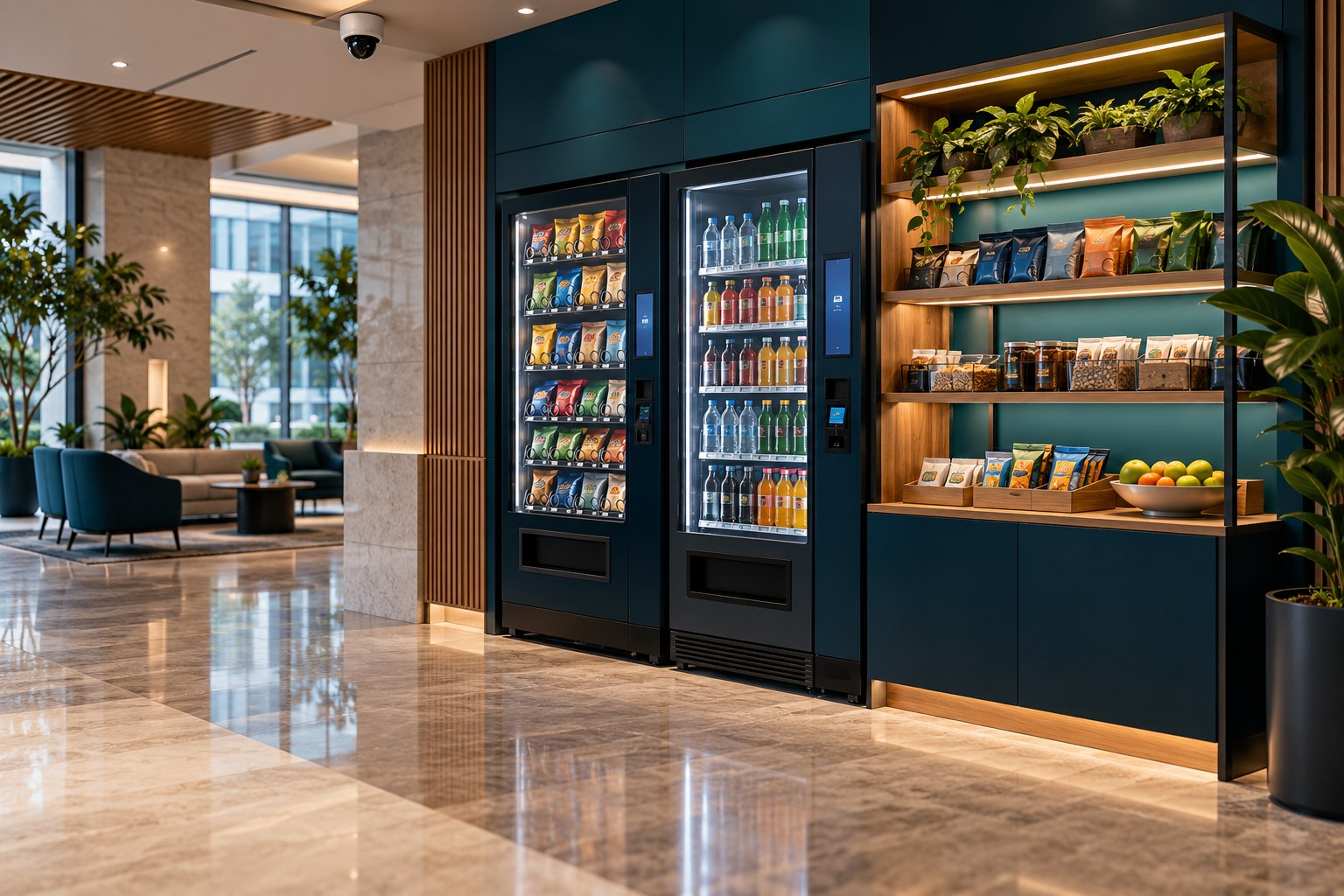
- Match each monitoring objective to what the approved view shows.
- Verify payment and equipment questions through the responsible operator.
- Give playback reviews a clear location, time window and question.
Begin with a question the camera can answer
A vending area or micro-market may contain several different activities within a small space: browsing, payment, replenishment and maintenance. Before arranging monitoring, identify which of those activities needs observation and why. A camera aimed at the whole room may not answer a question about one machine or doorway.
Write each objective as a visible question. Is someone present outside the approved access period? Is a person repeatedly pulling at a machine door? Has an obstruction appeared in the agreed access view? Specific objectives make it easier to choose the relevant cameras and decide when a contact is needed.
Keep payment conclusions separate from video observations
A person leaving with an item is an observation. Whether payment succeeded is a separate question that may require a transaction record or confirmation from the operator. Unless that information is actually available and verified through an agreed process, a report should not present non-payment as an established fact.
The same distinction applies to a vending machine interaction. A camera may show repeated attempts to use a machine without explaining whether the issue involved payment, dispensing or something else. Route those questions to the operator's support or maintenance contact instead of assigning a diagnosis to an incomplete view.
Design coverage around access and service visits
Record when the space is available to users and when service visits are expected. A micro-market inside another building may follow that building's schedule, while an individual vending location may have a different operating pattern. Document the actual arrangement instead of assuming the area is always open because it is unattended.
Add a simple process for replenishment, cleaning and maintenance updates. The monitoring team needs to know the relevant time and location, plus a contact who can confirm an exception. Temporary access arrangements should have an end point so an old visit does not continue to explain later activity.
Define who receives each kind of observation
The machine operator, building manager and local facilities team may be different people. Decide in advance who receives an access concern, who handles a customer assistance request and who can arrange a maintenance check. Include a backup route for any contact expected to receive time-sensitive notifications.
Monitexa's role is to observe approved views, verify what can be checked within the agreed scope, follow the contact plan and report. The responsible operator decides what action to take. Monitoring should not imply that a remote observer can reset equipment, refund a transaction or attend the location.
Use playback for a defined event or period
When the question concerns something that already happened, define the review request before starting playback. Include the location, approximate time, relevant camera and the issue being investigated. If the time is uncertain, give the narrowest supported window and explain how that window was chosen.
A useful review distinguishes visible findings from missing information. It might establish when someone approached a machine while leaving the transaction outcome unresolved. Ask for a concise event sequence and any important visibility limits. Recorded footage can support an investigation, but it should not be described as answering questions it cannot show.
Keep the monitoring plan proportionate to the location
Start with the views and coverage periods linked to a clear operational need. Do not assume every machine requires a separate camera or an identical monitoring schedule. Discuss the available views, reporting requirements and any larger camera arrangement with the provider; consult the pricing page for current service information.
Review recurring notifications with the operator. Repeated uncertainty about a service visit may call for better scheduling updates. Repeated machine complaints may need a maintenance follow-up by the responsible team. The monitoring plan should make those handoffs easier while remaining precise about what observation has established.