
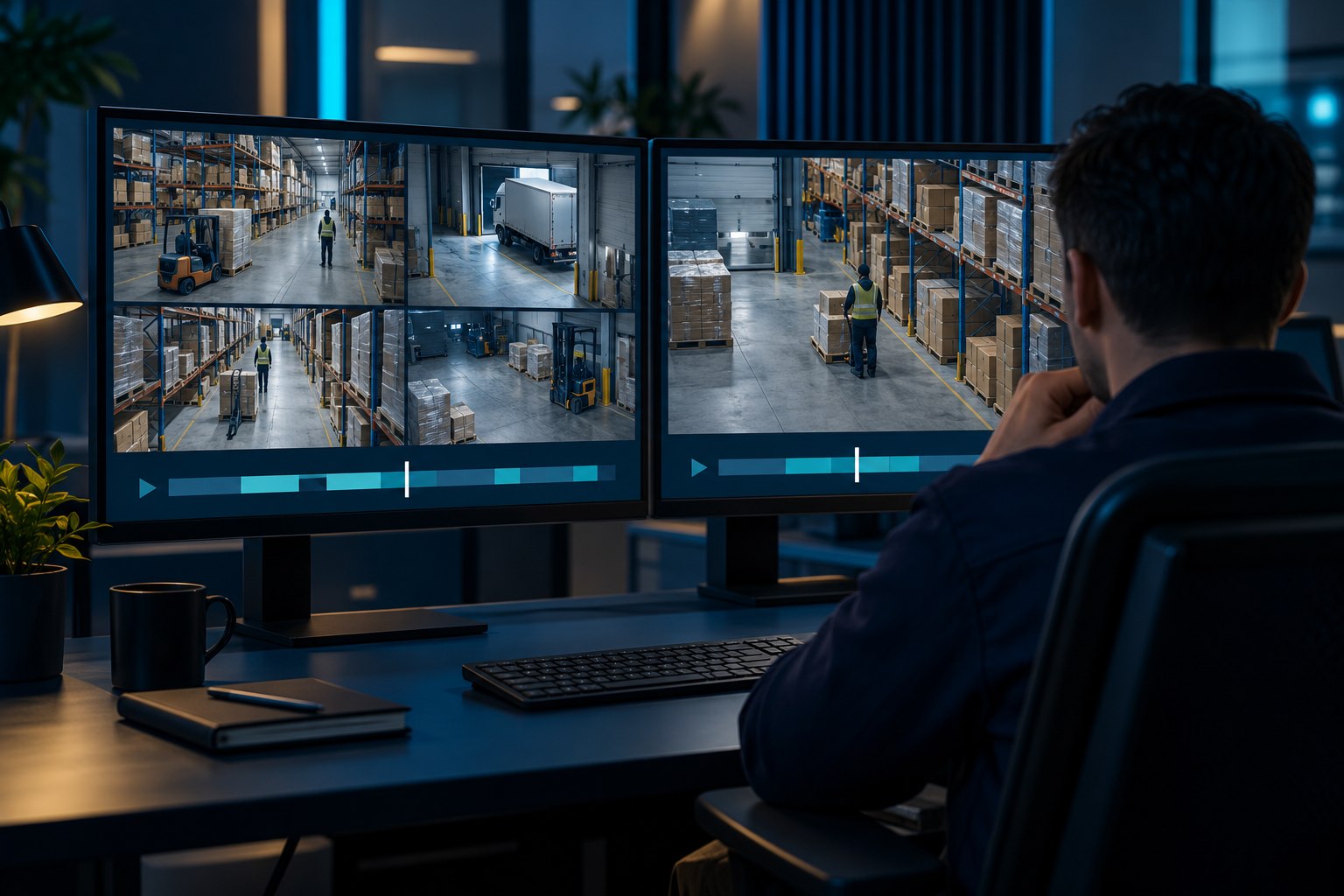
- Give a neutral question, time window, and camera list.
- Agree access, handling, and the required report format.
- Confirm estimated service hours and approval for extra work.
State the question the review should answer
Start a playback request with a short, neutral description of the issue. Explain what is known, how it became known, and what you want the footage review to establish. A request to identify the visible movements around a loading entrance is clearer than asking a reviewer to find everything suspicious.
Separate confirmed facts from working assumptions. If an item was last checked on Monday and noticed missing on Wednesday, say that. Do not present a guessed event time as established. A useful brief gives the reviewer a starting point without steering the description toward a predetermined conclusion.
Define the recording window and time references
Provide the relevant date range, approximate times, and the time zone used in your request. List any known difference between the recording timestamp and a reliable reference. If the timing is uncertain, explain the uncertainty and identify the event or record that supports the proposed starting window.
Include enough context before and after the suspected activity to make the sequence understandable. That does not require commissioning an unlimited search. Agree an initial window and a checkpoint for expanding it if the available footage points elsewhere. Any expansion should have an approved scope and billing basis.
Identify cameras and describe the location
Use camera names that match the recording system and pair them with plain-language locations. A simple site image or location note can explain which view covers an entrance, corridor, vehicle route, or adjoining area. Identify the direction of travel or the object of interest using information you can reasonably support.
Mention known gaps such as an offline camera, an obstructed view, or a recording period that is unavailable. Reviewers need this information to plan the work and explain limitations. Access to several recordings does not necessarily create an uninterrupted view of an entire event.
Arrange appropriate access and handling
Confirm that the person commissioning the review can authorize access to the selected recordings. Agree the approved access method, the available file formats, and any restrictions on downloading, copying, or sharing footage. Provide a contact who can resolve access problems without circulating passwords through an informal message thread.
Where files are supplied, keep a record of their source and provide clear file names. Explain whether the material is an original export, a shortened clip, or a screen recording. Avoid altering source recordings to make them easier to interpret; supply explanatory notes separately and follow the agreed handling process.
Specify the output and the review boundary
Decide whether you need a concise finding, a chronological account, selected timestamps, or an incident report with approved supporting images. Identify the intended recipients and any deadline. Ask the reviewer to state what was examined, what was visible, and what could not be established from the available footage.
Request descriptions that separate observation from inference. A figure moving an object may be visible while the object's contents, the person's identity, or their authorization remain unknown. Human review can help organize a sequence and verify visible details; it cannot recover information that the recording does not contain.
Agree the estimate before review begins
Ask for an estimate of the service hours required for the agreed task and a written explanation of the billing basis. Recorded duration, camera count, and review time are different measures. A multi-view search, access difficulties, or a detailed reporting request may affect the work required, so avoid treating footage duration as the billable total.
Confirm the initial authorization, the point at which an update is needed, and who can approve additional work. With those details in place, the reviewer can begin with a clear question, usable material, and an agreed route for reporting findings.