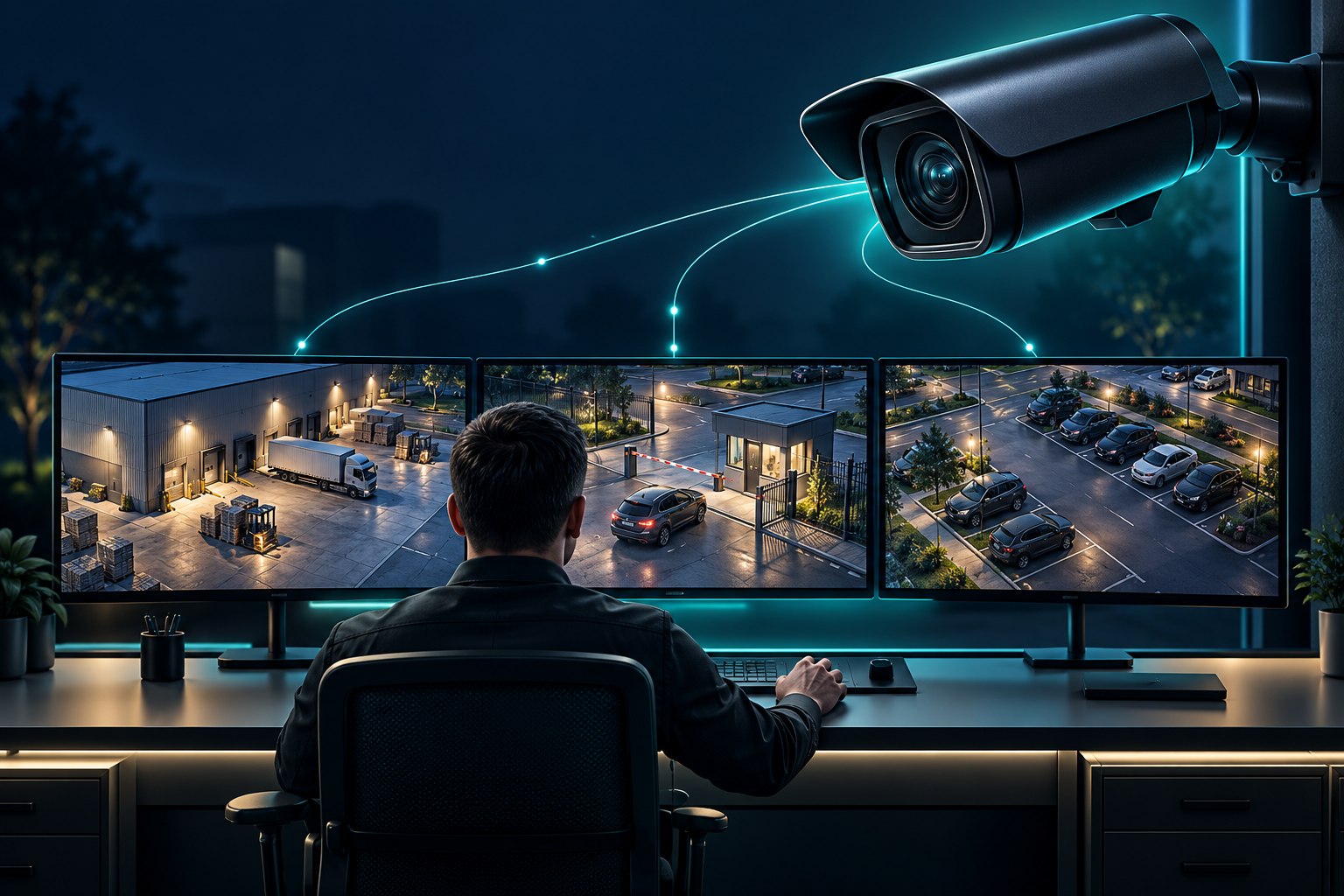
- Choose live monitoring for agreed attention to current activity.
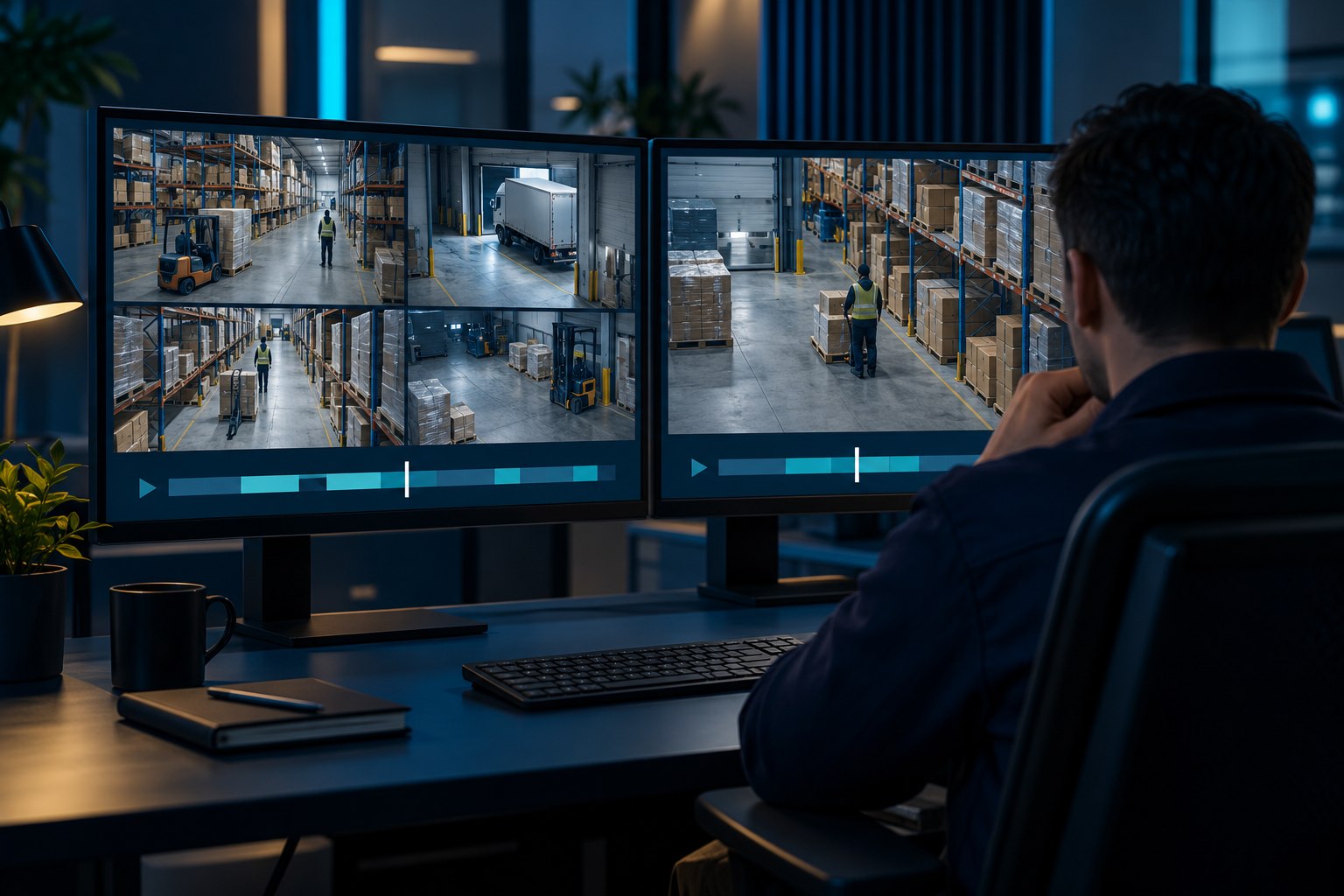
- Choose playback review for a defined question about available recordings.
- Confirm access, camera scope, reporting, and the charging basis before starting.
Begin with the question you need answered
Live monitoring and playback review both involve people looking at camera footage, but they serve different decisions. Live monitoring supports awareness of activity during an agreed coverage period. Playback review examines available recordings to understand something that has already happened. Choosing between them starts with the timing of the decision you need to make.
Write your requirement as a sentence. For example, you may want your duty manager notified when a restricted door is used after closing. Alternatively, you may need to establish when a delivery vehicle arrived yesterday. These requests point toward different workflows and different preparations.
Use live monitoring when current activity needs attention
Live monitoring is appropriate when an observation may prompt an authorized person to act while the situation is developing. The assignment needs defined camera views, coverage hours, event instructions, and reachable contacts. The operator's work is connected to a present operational need, such as drawing attention to activity in an area that should be closed.
Illustrative example: a business wants its evening supervisor notified when vehicles enter a closed loading lane. The scope should define the lane, relevant hours, known exceptions, and contact method. It should also specify what the operator does when the image is unclear or the supervisor cannot be reached.
Use playback review to reconstruct a bounded event
Playback review is most useful when the request includes a focused question, a time window, and relevant camera views. Instead of asking someone to find anything unusual, describe the sequence you want to understand. A narrower brief makes the review easier to organize and its findings easier to evaluate.
Illustrative example: a delivery team disputes the order in which two vehicles used a bay. A review might identify visible arrival and departure times within an agreed recording window. The result should state which views were reviewed, what was observable, and any gaps. Missing footage or an obstructed view cannot be repaired by a more confident description.
Check the dependencies before comparing cost
Live work depends on usable access during the agreed monitoring period and a response route that fits the site's operating hours. Playback work depends on the requested recordings being available, accessible, and relevant to the question. Confirm the date, time zone, camera names, and any known clock discrepancy before a review starts.
Ask what the quoted scope covers: service hours, review window, camera views, reporting, and permitted follow-up. A recording window and the time spent reviewing it are different quantities, so confirm the charging basis. Monitexa's pricing page provides a starting point; larger camera setups need a discussion and custom quote.
Combine services around a specific operational need
Some sites have a reason to use both services. Live monitoring can support an agreed period of active attention, while a separately scoped playback review can examine a recorded event or clarify its sequence afterward. The second task should have its own question rather than become an undefined extension of the first.
For an illustrative warehouse arrangement, a manager might request live coverage during an evening dispatch period and later request review of a particular loading discrepancy. That combination only makes sense if recordings are available and the additional review is agreed. Neither service guarantees that every event will be visible or that an on-site response will occur.
Prepare a short brief for the service you choose
For live monitoring, list the hours, priority views, event rules, and escalation contacts. For playback review, supply the question, dates, time window, relevant cameras, and expected output. In both cases, identify the person who can authorize access and resolve questions about the site's normal activity.
Decide what a useful outcome looks like before work begins. It might be a clear notification to the duty contact or a factual timeline with recording references. Share that outcome with Monitexa so the proposed service can be scoped around your actual decision, with limitations and responsibilities understood from the outset.