
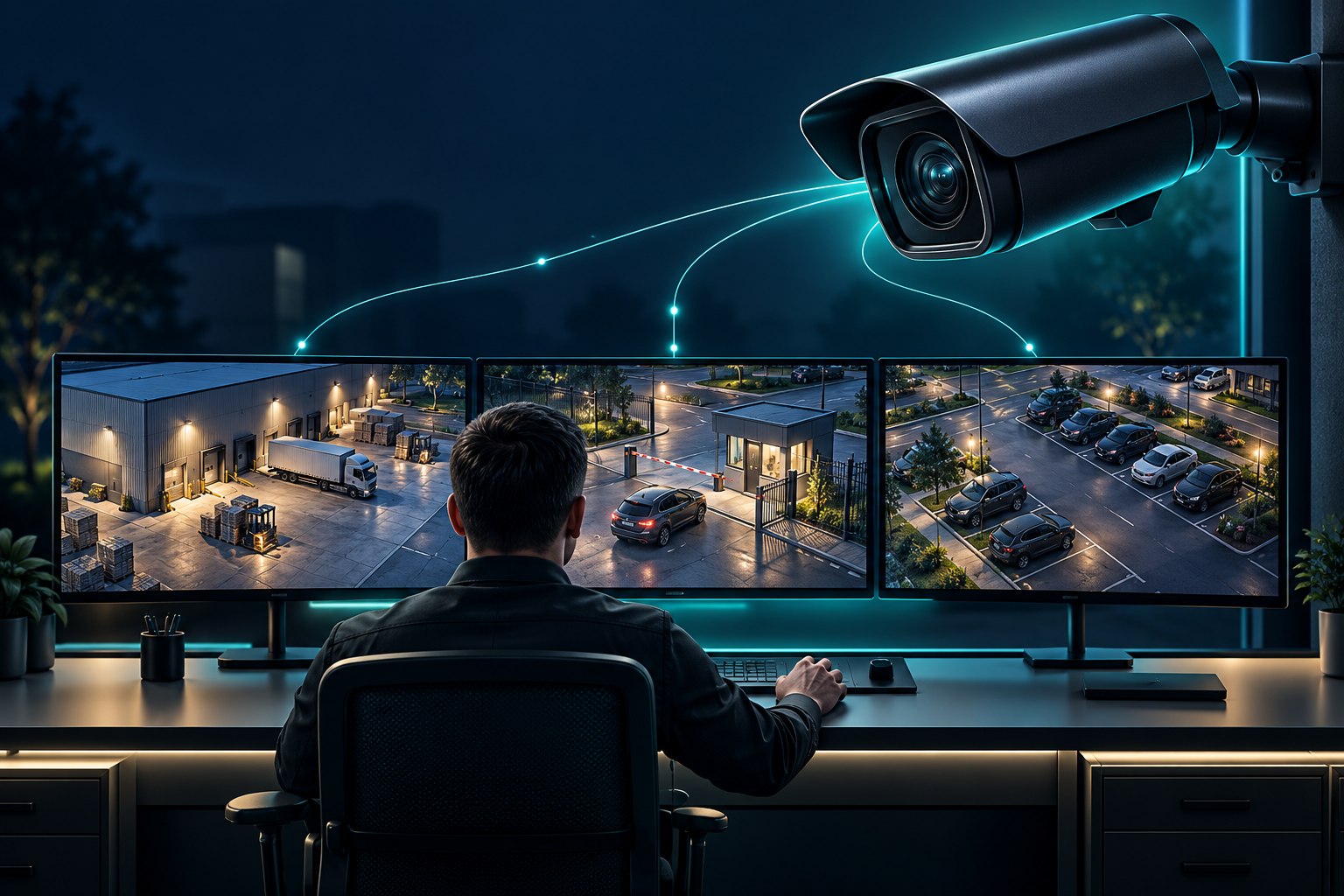
- Define coverage hours, camera views, and observable events before service starts.
- Agree who receives notifications and what happens if they do not respond.
- Keep factual observations, uncertainty, and follow-up actions separate in reports.
Start with a clear definition of the job
Remote CCTV monitoring places an operator away from your premises in a position to observe agreed camera views and follow your instructions. The useful question is not simply whether someone can access your cameras. It is what they should look for, during which hours, and what they should do when they see it.
Monitexa provides human-led monitoring with operations in Bangladesh and support for eligible international sites. Each site's suitability, access method, coverage hours, and instructions need to be agreed. A practical service description should connect four activities: observe, verify, contact, and report.
Observe the areas that matter to your operation
Begin with a short list of operational priorities. A rear entrance, dispatch lane, stockroom door, or reception area may each require different attention. Give every relevant camera a recognizable name and explain what normal activity looks like. Opening hours alone rarely describe delivery windows, cleaning visits, or authorized late working.
Define whether the assignment involves live observation, scheduled checks, or another agreed viewing pattern. Do not assume every camera receives uninterrupted attention merely because it appears in a camera list. Discuss how the number of views and the activity on them affect the proposed service scope.
Verify what the available images actually show
Verification means checking an observation against available visual context and site instructions. An operator might consult another authorized view or compare the activity with an expected visit. The aim is to describe the event accurately enough for the right person to make a decision.
Illustrative example: a person enters a loading area after the usual closing time. The report should distinguish visible facts, such as an open gate and movement toward a vehicle, from unresolved questions about authorization. If the relevant view is obstructed, that limitation belongs in the record. Images alone may not establish identity or intent.
Contact people through an agreed escalation route
A contact list becomes useful when it specifies responsibility. Identify the primary recipient, an available backup, the communication channel, and the event types each person handles. Include what happens when a contact does not respond. These steps should be agreed for the site rather than improvised during an incident.
Remote observation does not itself provide an on-site response. Do not assume emergency dispatch, confrontation, door control, or audible warnings are included. Your own emergency procedures and local response arrangements remain essential. Any additional action requires explicit agreement, suitable equipment where relevant, and a clear allocation of responsibility.
Report observations so another person can act
A useful event record answers simple questions: where, when, what was visible, who was contacted, and what happened next. Include the time zone and camera name. Separate the operator's observation from information supplied by a site contact. Record unsuccessful contact attempts without suggesting that a message was acknowledged.
Agree the reporting format before service begins. Your team may need individual event notifications, a shift summary, or both. Ask how recording references or permitted images will be handled and who should receive them. A report should help the next person understand the situation without reconstructing several disconnected conversations.
Turn the scope into a working site brief
Before requesting coverage, prepare one concise brief containing the site address, time zone, camera list, priority events, operating schedule, and contact route. Add known blind spots, planned maintenance, and the person authorized to update instructions. Treat changes to opening hours or access arrangements as changes to the monitoring brief.
Bring this information to a scoping discussion with Monitexa. The strongest starting point is an agreed set of observable events and achievable actions, supported by usable camera access. Review that brief after an initial operating period and whenever the way your site works changes.