- Define expected activity separately for each warehouse area.
- Record view limits and a process for confirming exceptions.
- Give the morning team a factual sequence with unresolved items.
Define after hours for each part of the site
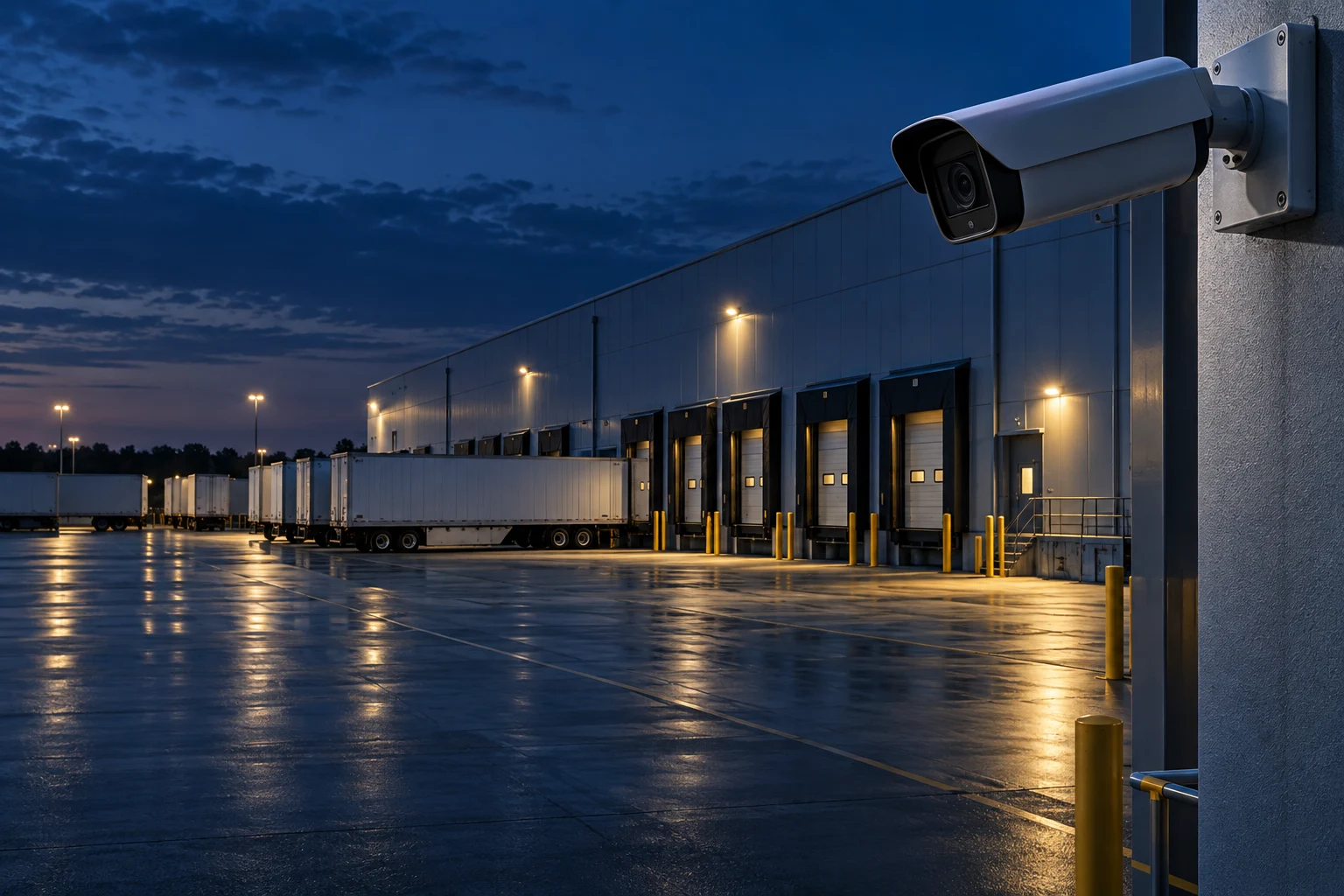
A warehouse can be closed to office staff while loading, cleaning or maintenance continues elsewhere. Start by defining the expected operating state of each relevant area: yard entrance, loading bays, personnel entrances and other approved views. One closing time for the whole site may hide useful differences.
Record routine activity and exceptions in a schedule the monitoring team can use. Include late collections, stock counts and contractor visits when relevant. Assign an owner to update the schedule, because a plan that reflects last month's operation can create uncertainty even when the camera images are clear.
Choose views that answer operational questions
For every approved camera, define its purpose. A yard entrance view might show an arrival during a closed period. A bay view might help establish whether activity is continuing beyond the expected collection window. A personnel entrance view may provide context for a check with the duty contact.
Record the limits alongside those purposes. Parked trailers, stacked materials and changing vehicle positions can obstruct a view. An observer cannot confirm activity outside the image or infer that a whole building is empty from one doorway. If an objective needs information the view cannot provide, revise the objective or the approved coverage.
Create a reliable way to confirm authorized activity
Provide an agreed process for checking expected visitors and out-of-hours work. The monitoring team needs enough information to ask the right question, such as which entrance a contractor will use and who can confirm the visit. Avoid relying on informal messages that are unavailable to the next shift.
Treat schedule information as context, not a conclusion about every person or vehicle on screen. If the observed location, timing or activity differs from the note, the observer should follow the agreed verification and contact process. Update or remove exceptions when work finishes so old instructions do not carry into the next period.
Build the contact plan around decision responsibility
Decide who can answer each operational question and who can arrange a local response when one is needed. A transport contact may be best placed to confirm a collection, while a facilities contact may own a maintenance visit. Include availability, a backup and the agreed next step for an unanswered call.
Monitexa supports human-led observation of approved views, verification within the defined scope, contact handoffs and reporting. Site personnel retain responsibility for access decisions, equipment and physical action. Make that division clear in the plan, and do not assume monitoring includes a guaranteed intervention or automatic emergency dispatch.
Specify the record the morning team needs
An overnight report should help the next team understand what was observed and what remains unresolved. Useful fields include the time, camera label, factual description, verification attempted, contact reached and the reported outcome. Distinguish a contact's confirmation from something the observer directly saw.
Keep the sequence clear when several observations concern the same activity. For example, an arrival, a contact attempt and a later departure belong in a connected account. If visibility was lost or no contact responded, record that plainly. A short accurate account is more useful than a confident explanation unsupported by the available view.
Rehearse and refine the plan
Before routine coverage starts, rehearse a late authorized collection, an unexpected arrival and an unavailable primary contact. Check that the observer can identify the location and the recipient understands the message. Resolve ambiguous camera names and missing contacts during the rehearsal, then review the first operational reports together.
Set coverage around the periods and questions that matter to the warehouse. Live observation supports notifications during agreed hours; playback review addresses a defined period afterwards. Discuss larger camera arrangements individually and use the pricing page for current service information. Revisit the plan when shifts, yard layouts, access arrangements or delivery schedules change.