- Review camera views at site milestones and layout changes.
- Keep temporary instructions and contact details current.
- Approve service changes and billing assumptions in writing.
Treat the plan as a working site document
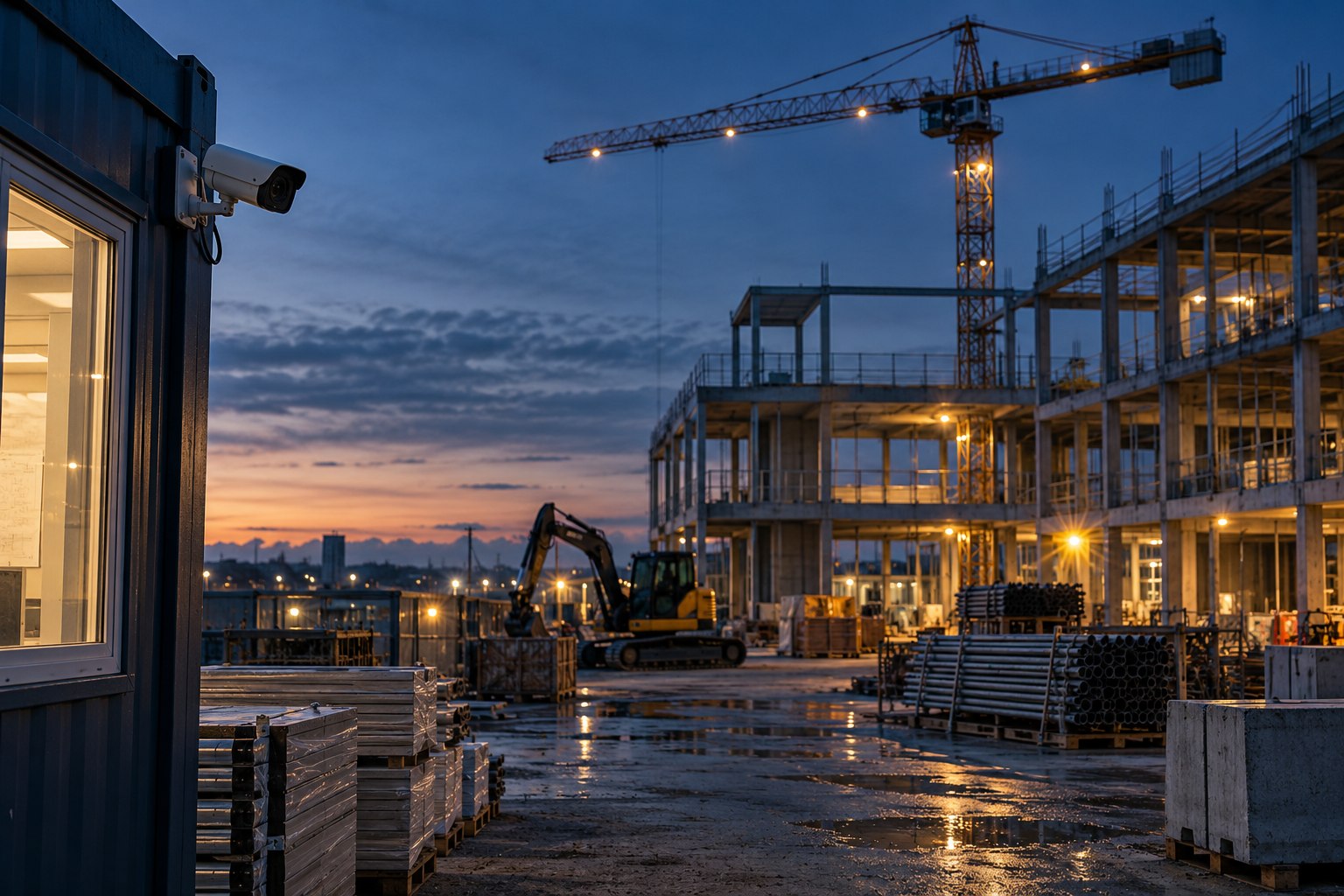
A useful camera monitoring plan describes the site as it operates today. On a construction project, that description can become outdated when a gate moves, a temporary building arrives, or deliveries switch to another entrance. Give one site representative responsibility for collecting these changes and sharing them with the monitoring team.
Keep a dated version of the plan with the current site layout, approved views, service schedule, and contact details. Record who approved each revision and when it takes effect. A short, current document is more useful than a detailed plan that no longer matches the ground.
Review views when the layout changes
Use project milestones as prompts to check camera views: a new work phase, scaffold installation, a delivery route change, or relocation of valuable materials. Compare the intended view with an actual recent image. A camera can remain connected while a new stack of materials blocks the area it was meant to show.
Identify the entrance, boundary, storage zone, or other agreed area each view supports. Note lighting changes and visible limitations, and assign any camera adjustment to the appropriate site team. Monitoring instructions should reflect the available view while an issue is awaiting attention.
Keep normal activity understandable
People reviewing a site need context for what they see. Share the agreed working hours, planned late shifts, expected weekend activity, and delivery arrangements. Where practical, send temporary changes before they take effect and state when the exception expires. Avoid leaving a one-night instruction active for the rest of the project.
Describe observable conditions clearly. For example, an instruction about activity inside a storage compound after a stated time is easier to follow than a request to flag anything unusual. A reviewer can describe visible activity; the image alone may not establish who is authorized to be there.
Check the contact plan alongside the views
Camera coverage and contact arrangements need to work together. Confirm who should receive an initial call or message, which backup contact follows, and what information each person needs. When a supervisor leaves the project or a contractor changes, update the list before the next scheduled service period.
Write down the agreed handling of unanswered calls and situations requiring urgent attention. Any escalation should follow the approved plan and applicable service scope. Human review can support observation, verification, and communication, but it cannot ensure that every event is seen or that an onsite response will be available.
Use reports to improve the next revision
Review recent reports for practical gaps: an unclear camera label, a repeated obstruction, incomplete location information, or a contact who could not be reached. Separate these issues from assumptions about what caused an event. A report can identify a visibility problem without proving that a camera move would have changed the outcome.
Bring a small number of actionable changes to the site meeting. Give each an owner and a target date, then confirm completion with an updated view or instruction. This creates a useful feedback loop between the monitoring team and the people managing the site.
Confirm changes to the service scope
Adding a night shift, changing approved views, or requesting an additional review may affect the work being commissioned. Before the change starts, confirm the revised service hours, responsibilities, and written billing basis. Do not assume that adding one camera creates a particular quantity of billable hours.
Keep the approved revision with the project records and share it with the relevant contacts. The aim is a plan that makes the intended observation, communication, and reporting clear as the construction site develops.